
Meet the Ogden Honors College Class of 2026
May 13, 2026
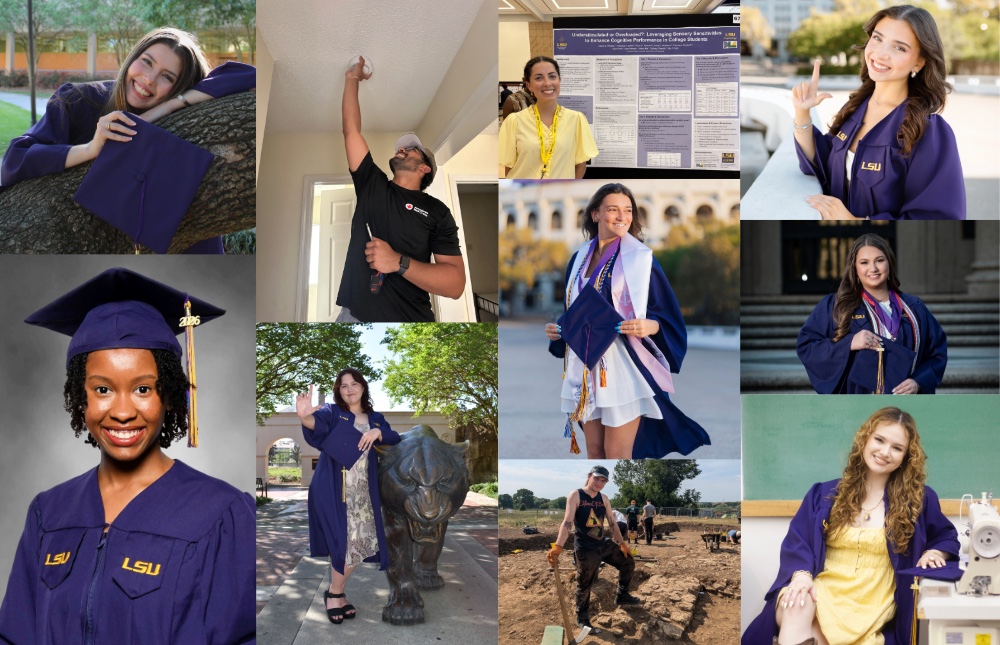 Every May, the Ogden Honors College celebrates its students crossing the stage at
Spring commencement. This year we celebrate a group of students who have gone above
and beyond in the classroom, in the lab, in the field, and in their communities. From
archaeological digs in the English countryside to policy research presented at Harvard,
from laboratory breakthroughs to community-centered service, the Class of 2026 leaves
LSU having made their mark.
Every May, the Ogden Honors College celebrates its students crossing the stage at
Spring commencement. This year we celebrate a group of students who have gone above
and beyond in the classroom, in the lab, in the field, and in their communities. From
archaeological digs in the English countryside to policy research presented at Harvard,
from laboratory breakthroughs to community-centered service, the Class of 2026 leaves
LSU having made their mark.
Mihir Babbar | Biological Sciences
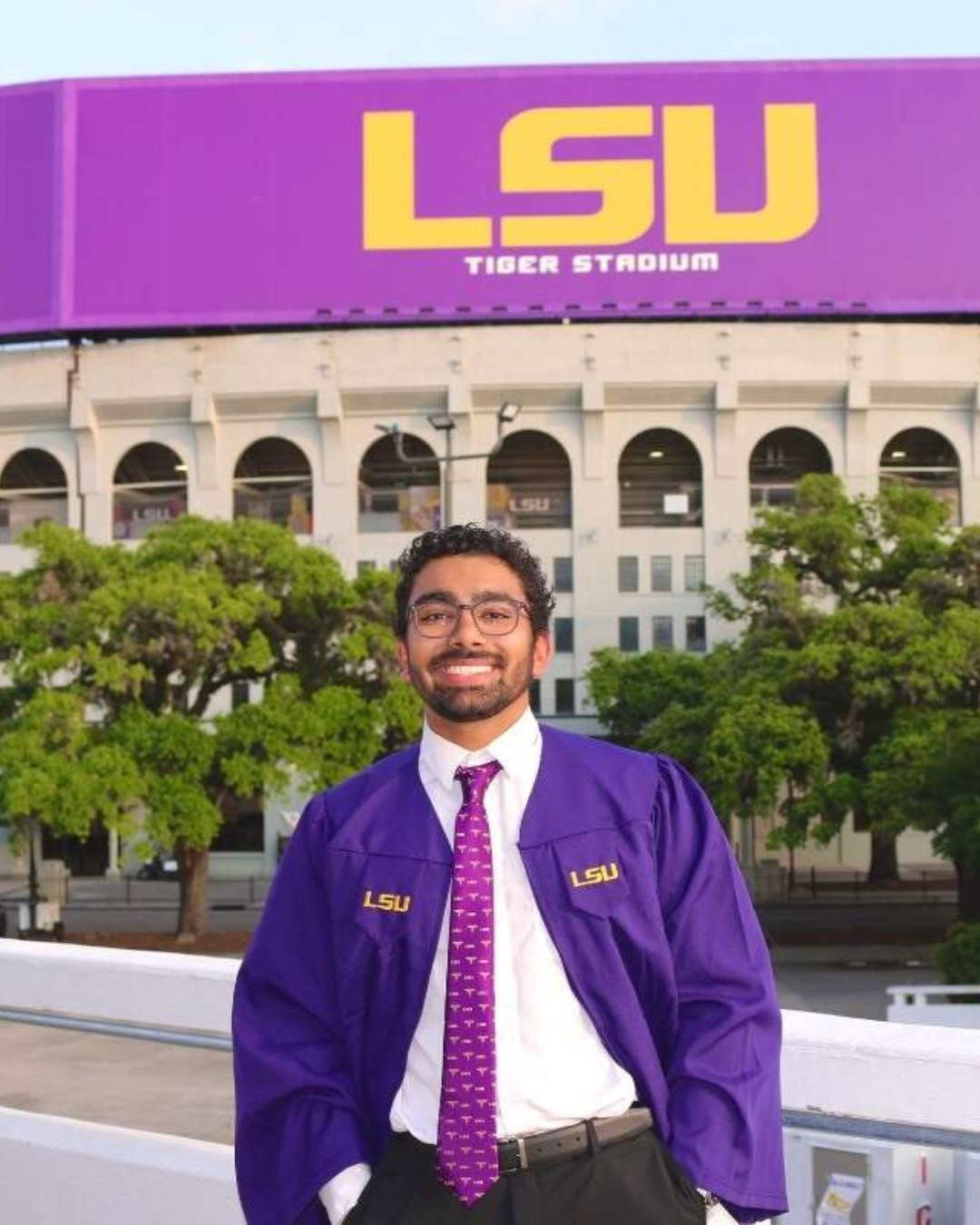 For Mihir Babbar, honoring his community wasn't something reserved for after graduation,
it was something he built into his time at LSU from the start. As Founder and President of the Red Cross Club of LSU, Mihir helped bring together student volunteers, American Red Cross team leaders,
and local partners—including fire departments and neighborhood associations—to launch
a local iteration of "Sound the Alarm," The American Red Cross' national hands-on
fire safety initiative that put free smoke alarms in the homes of Baton Rouge residents
most at risk.
For Mihir Babbar, honoring his community wasn't something reserved for after graduation,
it was something he built into his time at LSU from the start. As Founder and President of the Red Cross Club of LSU, Mihir helped bring together student volunteers, American Red Cross team leaders,
and local partners—including fire departments and neighborhood associations—to launch
a local iteration of "Sound the Alarm," The American Red Cross' national hands-on
fire safety initiative that put free smoke alarms in the homes of Baton Rouge residents
most at risk.
Mihir was named to this year's Tiger Twelve. Students named to the Tiger Twelve demonstrate excellence in all areas, including academics, leadership and service. He was also named a 2026 Communication Across the Curriculum Distinguished Communicator.
What's next: Medical school.
“ [I've enjoyed] the opportunities that they have offered, from research to volunteer work, and the support system of advisors and faculty in the Honors College. ”
Briana Barnum | Biological Sciences
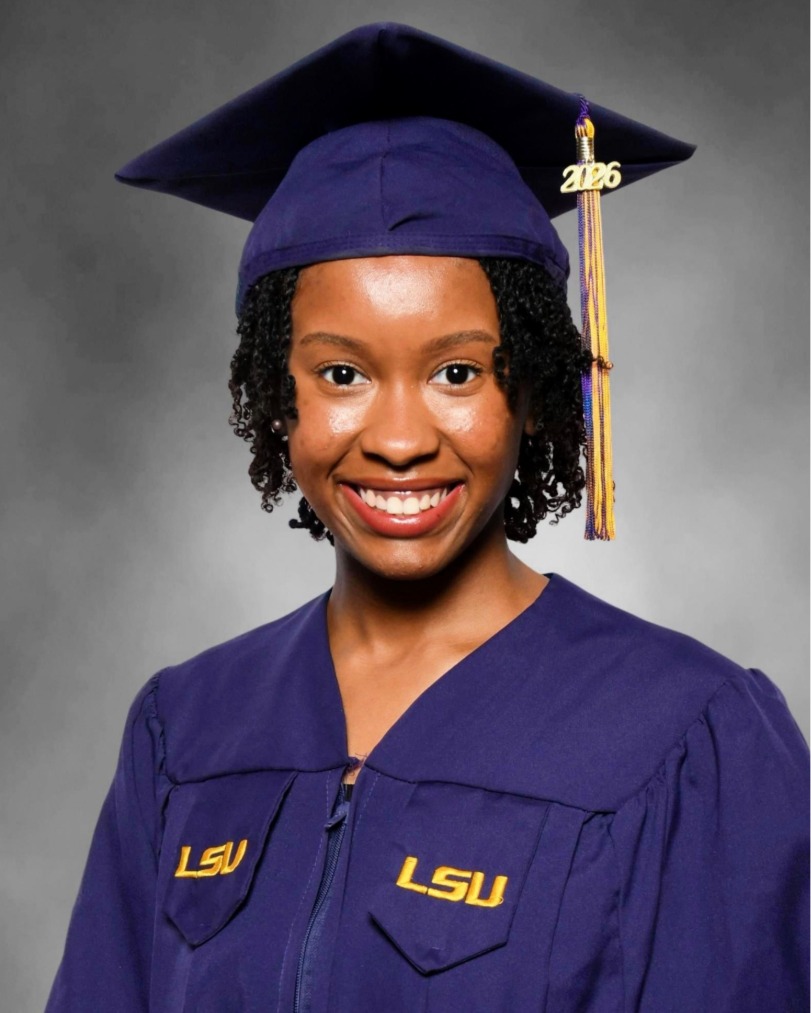
This year's Outstanding Senior in Biochemistry from the LSU College of Science, Briana Barnum spent her undergraduate career asking a question that affects all of us: what happens to our bodies when we're exposed to pollutants that never fully go away?
To find answers, Briana worked with a microscopic worm called Caenorhabditis elegans, a nematode whose biology mirrors our own in surprisingly meaningful ways. She exposed the worms to environmentally persistent free-radicals, a type of long-lasting environmental pollutants, and found that they showed significantly higher signs of biological stress than those that weren't exposed. The implications are sobering: if these pollutants produce that kind of response in a living organism, what might long-term exposure mean for human health and lifespan?
Briana presented her findings at LSU's Discover Day research showcase this spring, sharing work that could one day reshape how scientists and physicians understand environmentally linked disease. Beyond the research, she found unexpected inspiration in the Honors College's creative course offerings and in the museum excursions that, as she put it, broadened her understanding of the world.
What's next: A year-long graduate-level program, followed by medical school.
“ I greatly enjoyed the diverse and unique courses offered through the Honors College. I also valued the museum excursions available to residents, as they broadened my understanding of art from a wide range of cultures and perspectives. ”
Cam Crooks | Anthropology & History
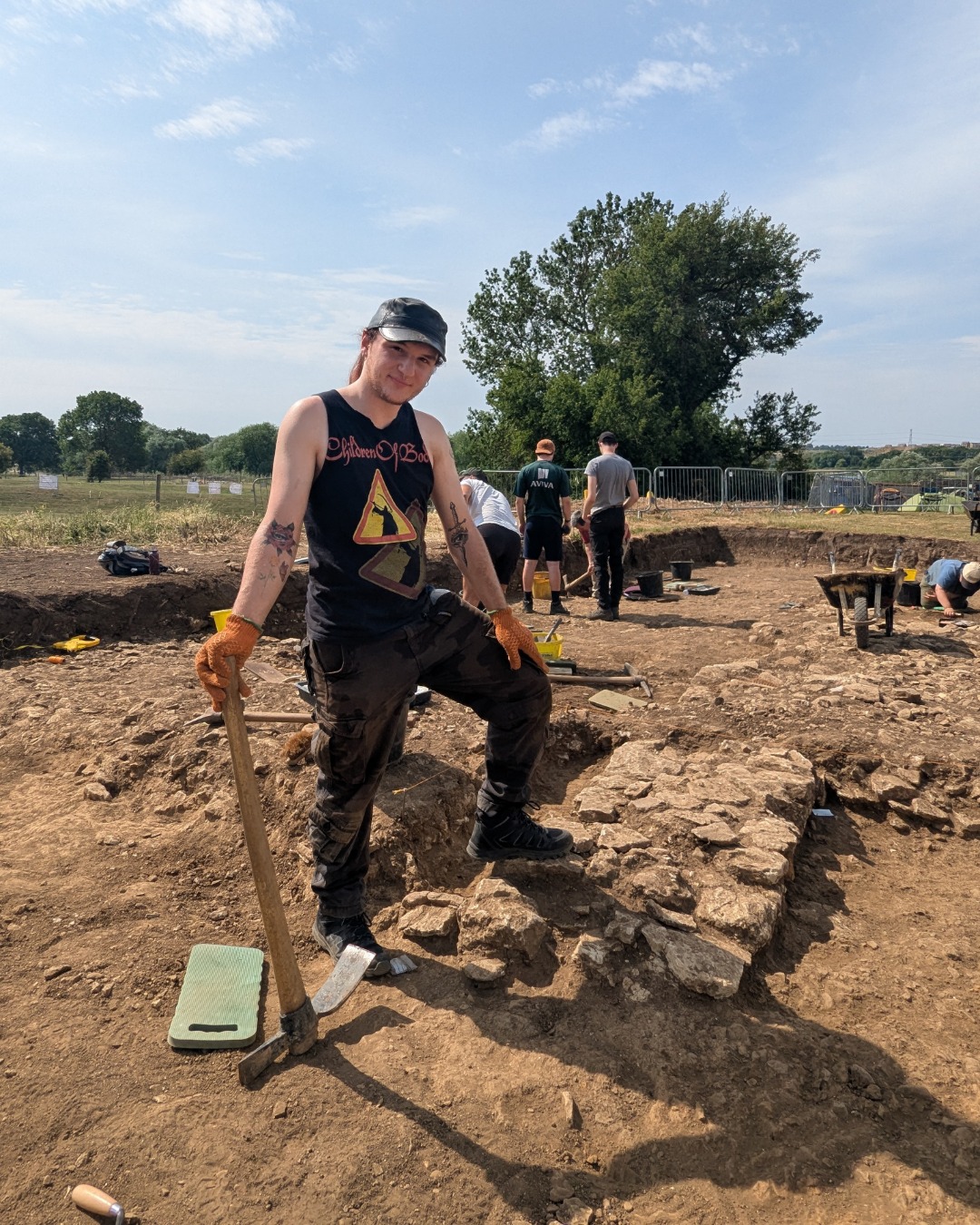 Few LSU seniors can say they've excavated both a Roman-era town and an Iron Age coastal
site in the same year, but Cam Crooks is not most seniors. Funded in part by the prestigious
Gilman Scholarship, Cam completed two archaeological field schools in the United Kingdom:
one with the University of Leicester at the Roman town of Irchester, and another with
Canterbury Archaeological Trust at a coastal Iron Age site near Folkestone. While
at Irchester, they also volunteered to help educate local children about the history
of tobacco use through archaeological remains, an experience that brought the past
to life in an unexpected way.
Few LSU seniors can say they've excavated both a Roman-era town and an Iron Age coastal
site in the same year, but Cam Crooks is not most seniors. Funded in part by the prestigious
Gilman Scholarship, Cam completed two archaeological field schools in the United Kingdom:
one with the University of Leicester at the Roman town of Irchester, and another with
Canterbury Archaeological Trust at a coastal Iron Age site near Folkestone. While
at Irchester, they also volunteered to help educate local children about the history
of tobacco use through archaeological remains, an experience that brought the past
to life in an unexpected way.
Their Honors capstone examined how the health and physical stature of people in Northamptonshire changed from the Roman to the Medieval period using measurements taken from archaeological femur bones to estimate height trends over centuries.
The accolades followed. Cam was awarded the Rotary Global Grant for graduate study, a testament to the depth of their scholarship and the strength of the relationships they built in the Honors College along the way.
What's next: A Master's degree in bioarchaeology in England and a summer excavating the Athenian Agora with the American School of Classical Studies at Athens.
“ The advisors in the Honors College were uniquely helpful and led to me receiving the Rotary Global Grant for my Master's study in bioarchaeology. ”
Jaden Frew | Liberal Arts (Classical Civilizations)
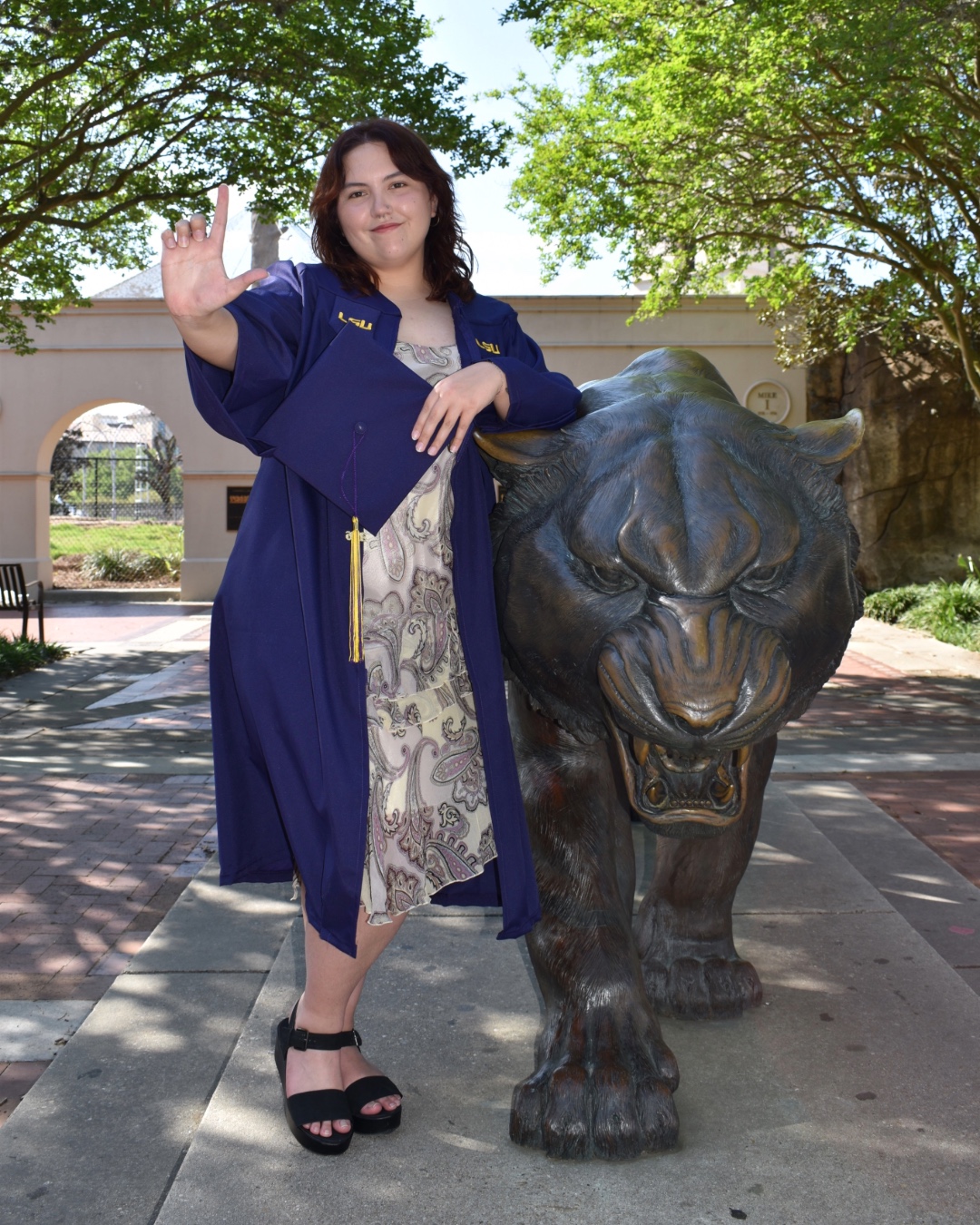
In a world that often confined them, ancient women found ways to claim power. Jaden Frew spent her undergraduate career uncovering exactly how they did it. Her Honors capstone, "Women's Rites: The Agency of Women Through Mystery Cults in the Greco-Roman World," examined three ancient religious movements—the Eleusinian Mysteries, the cult of Isis, and the Dionysian Mysteries—and the remarkable autonomy they offered to women who had little of it elsewhere.
It's the kind of research that reads as both history and provocation, asking what it means to find freedom within the margins of a society that otherwise denied it.
Jaden's work is a testament to what a Classical Civilizations education can do: illuminate the ancient world in ways that feel urgently modern.
For Jaden, the Honors College's greatest gift was the chance to sit in small classes and really know the people beside her, professors included.
“ With the small class sizes, it felt like I was able to connect with my professors and my classmates on a closer level than in some of the other classes I had taken outside the Honors College. ”
MaKenlee Price | Social Work
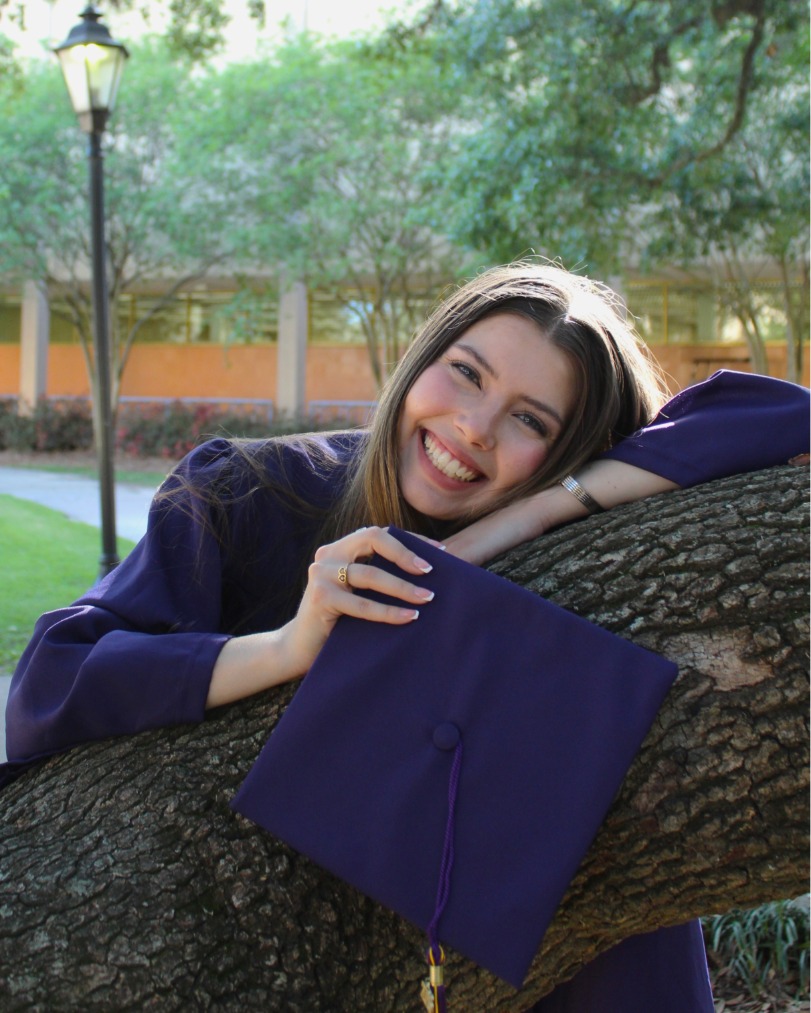
MaKenlee Price came to LSU to help people. She spent the past year doing exactly that, in settings that ranged from a courtroom to a school counseling center. As an intern with the Capital Area Family Justice Center, she supported survivors of domestic violence through some of their most vulnerable moments: sitting with them at court, conducting intake assessments, and compiling resources tailored to the particular challenges faced by working-poor families in Baton Rouge. She also co-wrote a grant application with Epilepsy Alliance Louisiana aimed at connecting public schools in Lafayette with the support specialists that students with epilepsy need to succeed.
This semester, she brought those same skills to Parkview Baptist School, joining a multidisciplinary counseling team providing individual therapy, group counseling, and psychoeducational programs to students. Across every placement, MaKenlee has approached social work the way the Honors College encouraged her to approach everything: with depth, curiosity, and genuine care.
“ I love how the relationships I formed during my first HNRS 2000 class stayed with me through college, and I will soon be a part of a larger network of LSU OHC alumni. ”
Kristen Richard | Biological Sciences
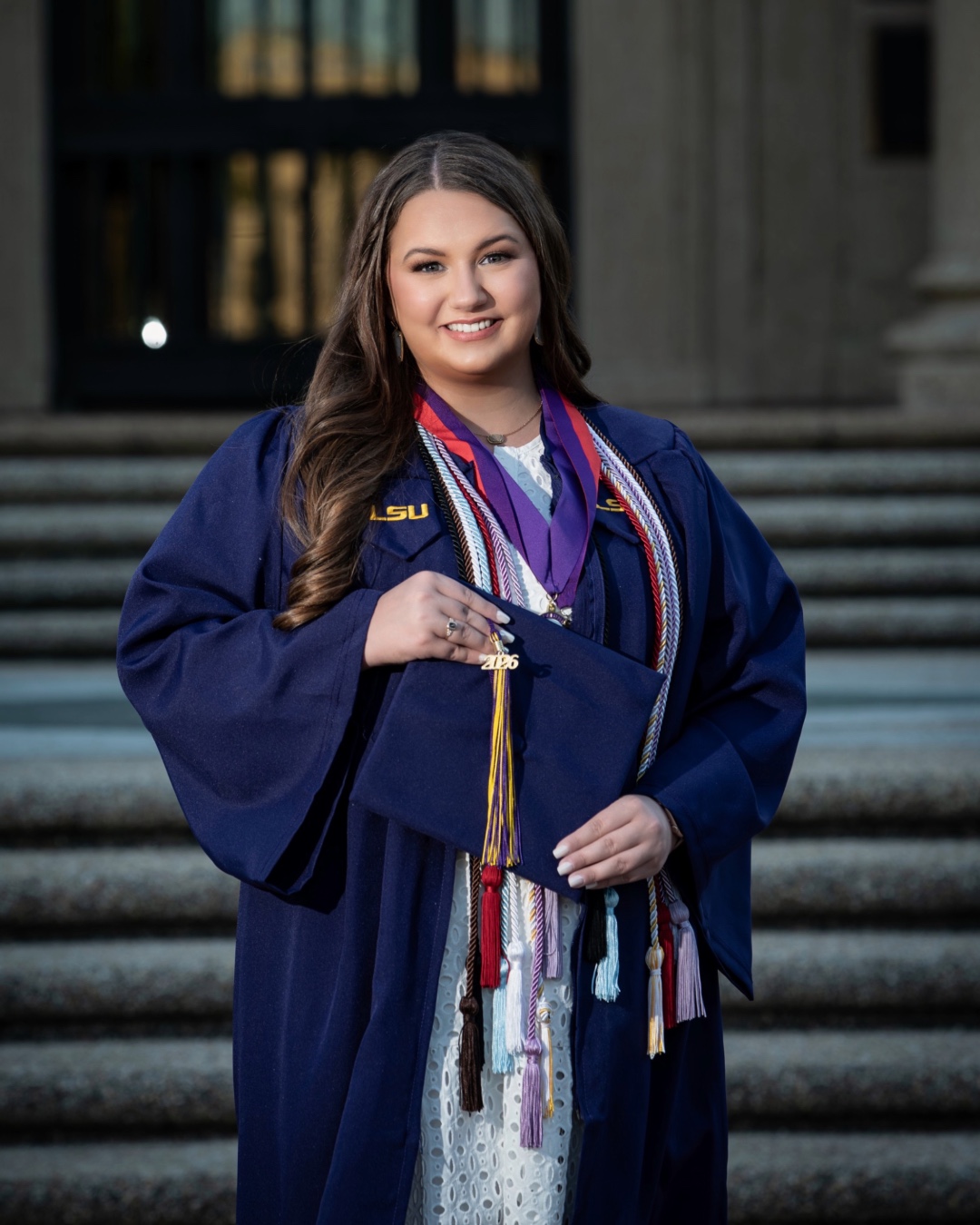 Kristen Richard's senior year was comprised of conducting bovine bone fracture research
in the lab, organizing community events as Honors College Council President, and spending
a summer studying abroad through the Ogden in Oxford Program.
Kristen Richard's senior year was comprised of conducting bovine bone fracture research
in the lab, organizing community events as Honors College Council President, and spending
a summer studying abroad through the Ogden in Oxford Program.
Her Honors capstone, "Dye-Enhanced Visualization of Damage-Induced Bovine Cortical Bone," addresses a gap in the scientific literature around how researchers visualize fracture damage in cattle bones after high-impact stress. Using controlled indentation on bone samples and three specialized histological dyes, Kristen developed improved techniques for analyzing that damage. This work offers real implications for how bovine injuries are understood and treated down the line.
Outside the lab, Kristen served as Honors College Council President in LSU Student Government, planning events throughout the year that brought the Honors community together — including a pumpkin painting collaboration with Art & Design, Desserts with Dean Earle, and the Amborski Award Ceremony. She also served as an Honors College Advocate and Honorific Scholar throughout her four years at LSU.
“ Being an Honors College Advocate, Honors College Council President, and President's Alumni Scholar has brought me so much joy, and I am forever grateful to the OHC for providing me with so many incredible opportunities, friendships, and experiences! ”
Martha Rigney | Textiles, Apparel Design, and Merchandising
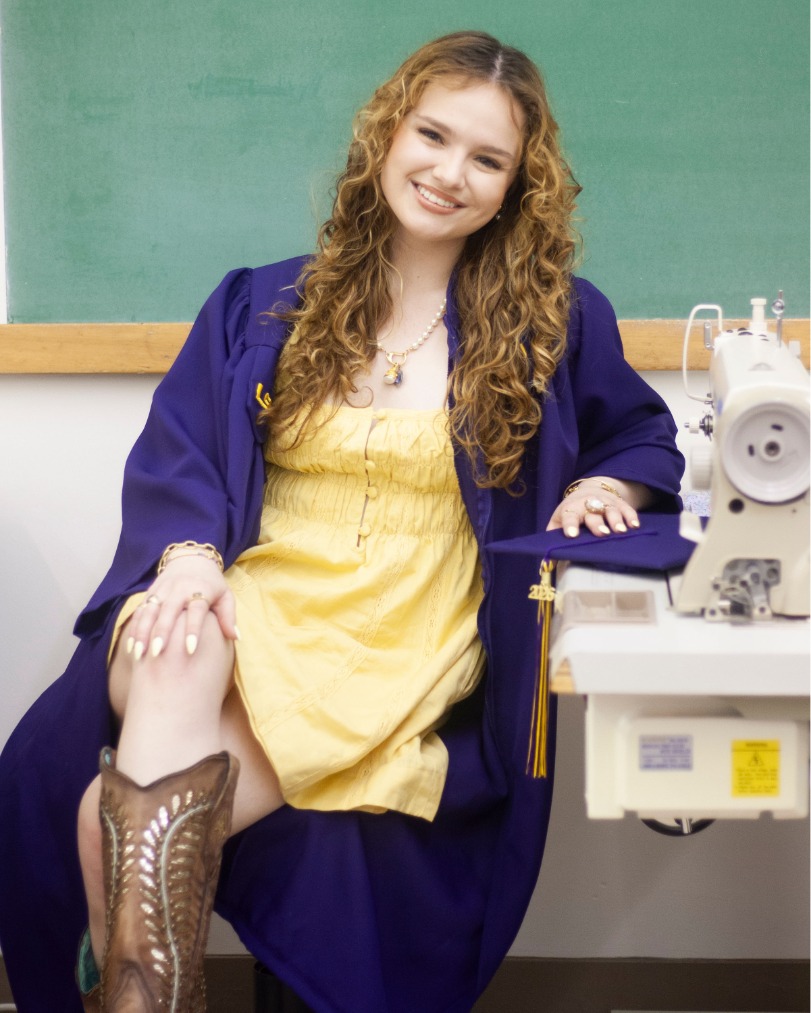 Martha Rigney's senior year was comprised of researching 1980s Japanese fashion in
the LSU Textile and Costume Museum, designing jazz costumes for a St. Louis dancewear
company, and crafting a couture bridal gown out of Louisiana alligator leather.
Martha Rigney's senior year was comprised of researching 1980s Japanese fashion in
the LSU Textile and Costume Museum, designing jazz costumes for a St. Louis dancewear
company, and crafting a couture bridal gown out of Louisiana alligator leather.
Her Honors capstone, “East of Paris: The 1980s Japanese Fashion Movement Explored through the Wardrobe of Lorie Labbe,” traces the cultural moment when Japanese designers like Issey Miyake captivated American fashion audiences using a donated collection of Miyake's garments as evidence of Tokyo's rise as a global fashion capital. The collection was donated to the LSU Textile and Costume Museum by TAM alumna Lorie Labbe, who worked at Issey Miyake retail in New York City during that era. Martha traveled to Los Angeles with her capstone director, Dr. Michael Mamp, to present her in-progress research this past summer.
Her alligator leather bridal gown, developed under Dr. Casey Stannard through an undergraduate research grant from the College of Agriculture, is a practical response to an industry challenge. Louisiana's alligator industry is struggling with a surplus of hides, and Martha's research explores new ways to put them to use. She presented the finished gown at the International Textile and Apparel Association conference in November, where she earned the International Textile and Apparel Association’s Blanche Payne Award.
“ Being in the Honors College gave me an excuse to dig deeper into my coursework, connecting technical skills to real-world applications and approaching apparel design from a research perspective. ”
Lucrezia Tomassetti | International Studies & Political Science
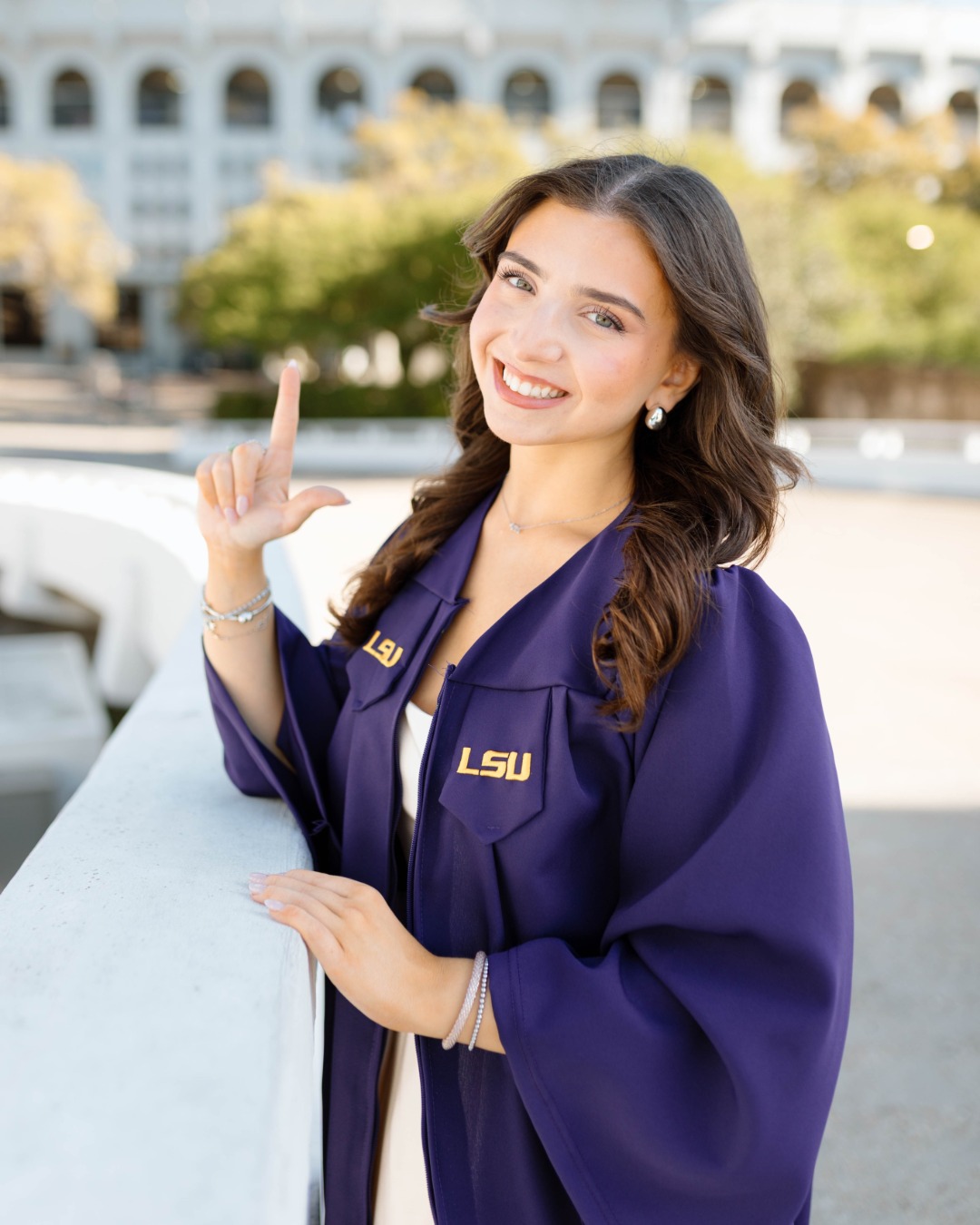 Lucrezia Tomassetti arrived at LSU as a first-generation, international student navigating
an unfamiliar academic system. She leaves it as LSU's Outstanding Tutor of the Year,
a Student Senator, the President of the International Student Association, and the
author of research presented at Harvard University, Texas A&M, and LSU's Discover
Day, where it won first place among all humanities and arts oral presentations.
Lucrezia Tomassetti arrived at LSU as a first-generation, international student navigating
an unfamiliar academic system. She leaves it as LSU's Outstanding Tutor of the Year,
a Student Senator, the President of the International Student Association, and the
author of research presented at Harvard University, Texas A&M, and LSU's Discover
Day, where it won first place among all humanities and arts oral presentations.
Her Honors capstone investigates whether peace agreements that include gender-sensitive provisions, protections and guarantees designed specifically for women, actually produce more lasting peace. Drawing on data from nearly 300 agreements, she examines everything from participation clauses to institutional reform, asking hard questions about the gap between language and political will. It's research that sits at the intersection of idealism and realism, which feels fitting for a scholar who has spent four years doing both.
She completed a second capstone through the International Studies Program, analyzing the history and challenges of implementing gender-based provisions in Colombia. She spent the year leading tutoring sessions and conducting weekly observations of other tutors at the Center for Academic Success. Through it all, she credits the Honors College community (and one advisor in particular) with making the journey possible.
What's next: A Master's in International Peace and Conflict Resolution at American University's School of International Service in Washington, D.C.
“ Being in the Honors College exposed me to a vibrant, welcoming, and supportive community that transformed my undergraduate career. As a first-generation, international student, navigating academics in the United States was initially challenging, but Ms. Sarah Sabin always welcomed my questions with kindness and compassion. ”
Gianna Vaccaro | Psychology and Political Science
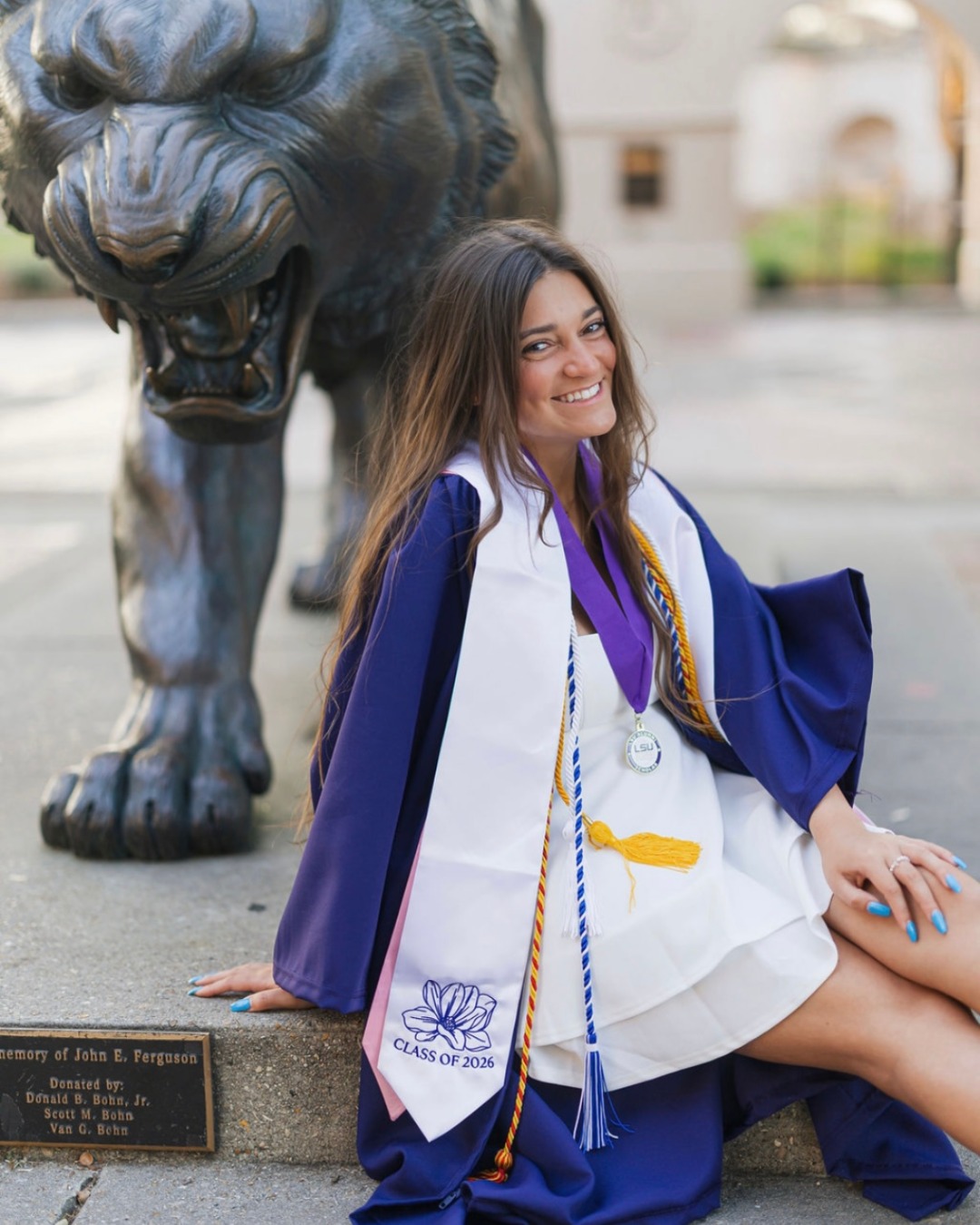 What makes a justice consistent? That's the question at the heart of Gianna Vaccaro's
Honors capstone, which examines the constitutional philosophy of Supreme Court Justice
Clarence Thomas across three distinct areas of law: the Second Amendment, the Equal
Protection Clause, and the Eighth Amendment. Her argument is that despite the different
outcomes his decisions produce, Thomas applies the same interpretive methodology throughout
that's rooted in original meaning and judicial restraint.
What makes a justice consistent? That's the question at the heart of Gianna Vaccaro's
Honors capstone, which examines the constitutional philosophy of Supreme Court Justice
Clarence Thomas across three distinct areas of law: the Second Amendment, the Equal
Protection Clause, and the Eighth Amendment. Her argument is that despite the different
outcomes his decisions produce, Thomas applies the same interpretive methodology throughout
that's rooted in original meaning and judicial restraint.
It's a thesis that requires both legal fluency and intellectual rigor, and Gianna brought both to the project. Her academic work was complemented by a legislative internship in the Washington office of Senator Bill Cassidy, where she engaged in policy research, supported constituent correspondence, and gained firsthand exposure to the daily operations of a U.S. Senate office. Through it all, she says she developed a sharper understanding of how law is made before it ever reaches the courts.
“ One of the most meaningful experiences was traveling to Berlin with my class, where I was able to connect historical study with real-world context. Visiting sites tied to major political and social developments brought a new level of depth to my understanding and made the material feel immediate and tangible. Experiences like this have made the Honors College especially rewarding by combining rigorous academics with opportunities for intellectual and personal growth. ”
Elena Whatley | Psychology & Political Science
 Have you ever put on white noise or lo-fi music to focus and found it actually worked?
Elena Whatley spent her senior year figuring out why. Her Honors capstone investigated
how different types of sensory stimulation affect a person's ability to concentrate
and control impulses, with a particular focus on whether ADHD symptom levels change
the picture. Her results were striking: while ADHD symptomology alone didn't significantly
affect task performance, the environment did. Participants performed better under
white noise and lo-fi music conditions than under motor or tactile stimulation, a
finding with real implications for how students, educators, and clinicians think about
learning environments.
Have you ever put on white noise or lo-fi music to focus and found it actually worked?
Elena Whatley spent her senior year figuring out why. Her Honors capstone investigated
how different types of sensory stimulation affect a person's ability to concentrate
and control impulses, with a particular focus on whether ADHD symptom levels change
the picture. Her results were striking: while ADHD symptomology alone didn't significantly
affect task performance, the environment did. Participants performed better under
white noise and lo-fi music conditions than under motor or tactile stimulation, a
finding with real implications for how students, educators, and clinicians think about
learning environments.
To run the study, Elena independently taught herself PsychoPy and Python to program the experimental tasks — a level of self-directed learning that reflects the kind of student she's been throughout her time at LSU. In the lab, she worked under Dr. Elia Soto at the Developmental Learning Center, contributing to meta-analyses, training in EEG and ERP data screening, and designing additional experimental tasks for future research.
Outside the lab, Elena served as Parliamentarian of the Red Cross Club of LSU, helping coordinate the same "Sound the Alarm" smoke alarm installation initiative as her fellow honoree Mihir Babbar. For Elena, the Honors College's greatest value was the access it provided: access to professors, to research, and to a kind of intellectual engagement that larger courses rarely afford.
“ Through [the] Honors Option, I've been able to engage more directly with professors and their research. Completing independent papers and projects has allowed me to explore my own areas of interest and receive direct feedback. This has helped me develop a stronger understanding of course material while also learning how it connects to real research and the work professors are doing in their fields. ”
Congratulations, Class of 2026!
These ten Tigers share one thing in common: each of them chose to go further. They chose to go further into their research, further into their communities, and further into the questions that matter most.
The Ogden Honors College is proud of everything the Class of 2026 has accomplished, and we can't wait to see what they do next!